
Properties Sold by Tender – A Complete Guide for Auckland Buyers and Sellers
A method that continues to deliver strong outcomes for both buyers and sellers is properties sold by tender. The tender process can be complex on the surface. However, it’s actually a highly structured, private, and flexible way to buy and sell real estate in New Zealand. This is true if you understand how it works.
As a Real Estate Agent at Barfoot & Thompson Albany, I regularly guide clients through tender sales. These sales occur across the North Shore and wider Auckland. This guide explains what selling by tender means. It explains why sellers choose it. And it teaches how buyers should approach it. Furthermore, it details how it differs from auctions.
All is done using proven Barfoot & Thompson best practice.
Key takeaways
- Properties sold by tender are a private, deadline-driven method of sale. Buyers submit confidential written offers. Sellers retain full control over which offer, if any, they accept.
- Sellers are not obligated to accept the highest offer. They can reject all tenders. Alternatively, they can negotiate with a preferred buyer based on price, conditions, and settlement terms.
- Buyers typically get one opportunity to present their best offer, making preparation, market awareness, and professional advice critical to success.
- Tender sales suit properties that benefit from flexibility and confidentiality. This includes family trusts, estates, and development opportunities. It also includes unique or higher-value homes.
- Expert guidance matters – a well-run tender process, supported by strong marketing, is important. Clear advice can create buyer competition. It can deliver premium outcomes for both buyers and sellers.
Written by:
Updated:
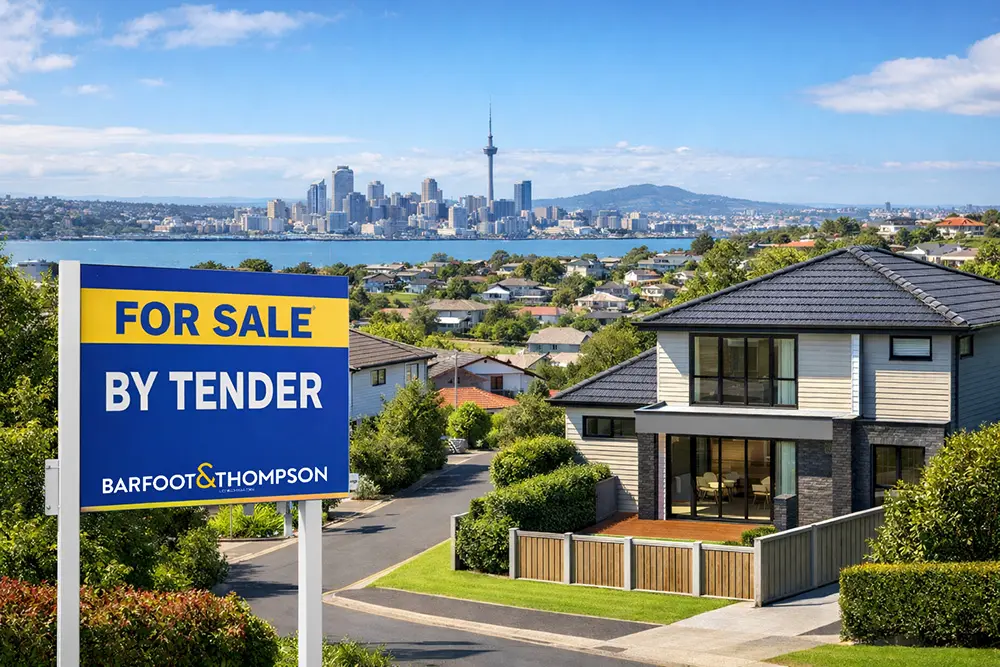
What Does It Mean to Sell a Property by Tender?
Real Estate Agents market a property sold by tender for a fixed period. During this time, Buyers submit private and confidential written offers by a specified deadline. Unlike an auction:
- Buyers do not see competing offers.
- There is no public bidding.
- Buyers submit offers on a legally binding tender document.
A branch manager opens all offers at the same time once the tender closes. They are then presented to the seller. The seller decides how to continue. In short, a tender is a controlled, deadline-driven sale that encourages buyers to submit their strongest possible offer upfront.
Why Would a Seller Choose a Tender Process?
Many Auckland homeowners choose properties sold by tender because the process offers control, flexibility, and confidentiality.
Key Reasons Sellers Opt for Tender (Barfoot & Thompson Guidance)
- Sense of Urgency – The fixed tender deadline creates momentum. It encourages buyers to act decisively. This approach prevents waiting or negotiating slowly.
- Buyer Competition – When multiple buyers submit offers independently, competition is created, often leading to a premium result.
- Confidentiality – Tender outcomes are private. Prices, conditions, and negotiations remain confidential between the seller and buyers.
- Time to Consider – After tenders close, sellers have an irrevocable five working day period. They can use this time to consider the offers before accepting. This is particularly helpful when multiple decision-makers are involved, such as in family trusts or estates.
- Flexibility – Sellers can choose the settlement date. They can evaluate conditions, and decide which offer best suits their needs. It’s not just about the highest price.
- No Price Limitations – By marketing without a price, sellers avoid under-pricing or over-pricing their home. This strategy attracts a broader pool of buyers.
- Market Feedback – Throughout the campaign, as your Barfoot & Thompson Real Estate Agent, I will provide regular buyer feedback. This feedback helps you understand market expectations before the tender closes.
Are There Properties That Particularly Suit Sale by Tender?
While almost any property can be sold by tender, this method is especially effective for:
- Properties owned by family trusts or deceased estates.
- Homes requiring due diligence (development potential, zoning, subdivision).
- Unique or high-value properties where price is harder to define.
- Sellers who want choice and control, not pressure.
Best Practice for Tender Sales
To achieve the best result, as your Barfoot & Thompson Real Estate Agent, I recommend:
- A targeted marketing programme to reach all relevant buyers.
- Regular open homes (twice a week) throughout the campaign to maximise exposure.
- A clear, consistent tender timeframe to allow buyers proper due diligence.
Are you ready to sell or buy in North Shore, Auckland? Contact me
Your message has been sent, I'll be in touch with you shortly.
How Properties Sold by Tender Work in New Zealand?
- Marketing Period
The property is marketed for a set time frame (usually 4–6 weeks). This includes online advertising and hosting open homes. There is also a clearly stated tender closing date and time.
- Buyers Prepare Their Offers
Buyers complete the standard tender document, outlining the purchase price Deposit (usually 10%) and settlement date. Also, any conditions such as finance, LIM report, Building report, due diligence clause, etc.
- Confidential Submission
All offers are submitted before the deadline, and held securely by Barfoot & Thompson. The offers are opened simultaneously in the presence of a branch manager or auctioneer.
- Seller Decision
The seller has five working days to accept an offer, or reject all offers. The seller can negotiate with one buyer (to the exclusion of others). Once the written offer is accepted, the tender becomes legally binding.

Yes, a seller can reject any or all tender offers, including the highest.
This flexibility is a major reason why many Auckland homeowners choose properties sold by tender.
Properties Sold by Tender vs Auction: What’s the Difference?
| Tender | Auction |
| Private & confidential | Public bidding |
| Conditions allowed | All offers are unconditional |
| Sellers controls negotiations | Immediate binding sale |
| Flexible decision-making | High-pressure environment |
Auctions suit confident, unconditional buyers. Tenders suit buyers who value privacy or need conditions.
Your Guide to Buying Properties Sold by Tender
For buyers, purchasing a property by tender requires preparation and decisiveness.
Understanding the Tender Process
- Offers must be submitted on the official tender document.
- All tenders are held securely until the deadline.
- The seller has five working days to decide.
- If accepted, you are legally bound.
Presenting Your Best Offer
You usually get one opportunity to impress the seller.
- Unconditional offers are often the most attractive.
- Conditional offers are acceptable, but should be well structured.
- Price should be based on:
- Comparable sales
- Market conditions
- Professional advice
As your Barfoot & Thompson salesperson, I can guide you using recent local sales data.
Are you thinking about selling your property, but not sure where to begin?
Download my step-by-step PDF guide From Start to Sold, which I’ve written for home owners thinking about selling.
Registering Your Interest
Always formally register your interest with your salesperson. This ensures:
- You’re notified of any changes.
- You don’t miss key deadlines.
- You’re kept informed if early offers are considered
Before Submitting a Tender, You Should:
- Read and understand the tender documents.
- Insert any conditions or settlement variations.
- Seek legal advice if needed.
- Understand that acceptance = a binding contract.
Buyer Tips
- Tender documents differ from standard sale & purchase agreements.
- Organising finance early can allow you to submit an unconditional offer.
- Bridging finance can strengthen your position significantly.
What Is the Most Crucial Stage in Properties Sold by Tender?
For buyers:
👉 Submitting your strongest, best-structured offer upfront
For sellers:
👉 Assessing offers beyond price alone – including certainty, conditions, and timing
Final Thoughts from Michael Hossaini
Properties sold by tender are not about guesswork, they’re about strategy, preparation, and control.
When structured correctly, tender sales can deliver outstanding results for sellers and fair opportunities for buyers. The key is understanding the process and working with an agent who knows how to guide you through it properly.
If you’re considering selling by tende or preparing to buy one, I’m always happy to help. I can walk you through your options clearly. You will gain confidence in the process.
Speak soon.
Michael Hossaini

Did you love this article? Share it with your network.
Properties Sold by Tender, Related Articles

Discover more from Michael Hossaini
Subscribe to get the latest posts sent to your email.